
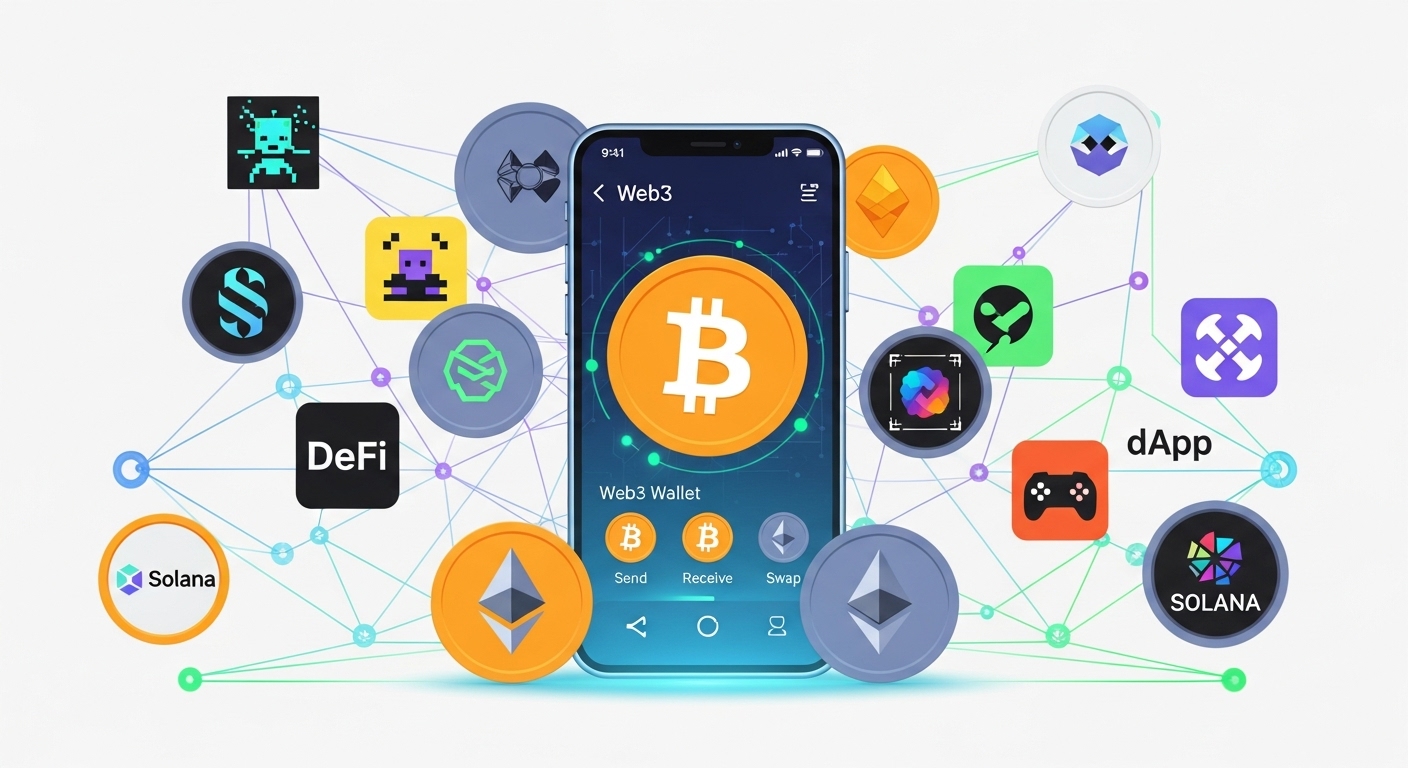
What Is Web3 Wallet? Web3 wallets give users control over their digital assets, moving away from banks and centralized payment providers.
These wallets let you store, send, and receive cryptocurrencies, NFTs, and tokens while connecting directly to decentralized apps.
What Is a Web3 Wallet?
If you’re new to blockchain or crypto, you’ve likely come across the term “web3 wallet.”
This digital wallet is a vital tool for anyone who wants to directly manage crypto assets, use NFTs, or interact with decentralized apps (dApps) across different blockchains.
Core Purpose of a Web3 Wallet
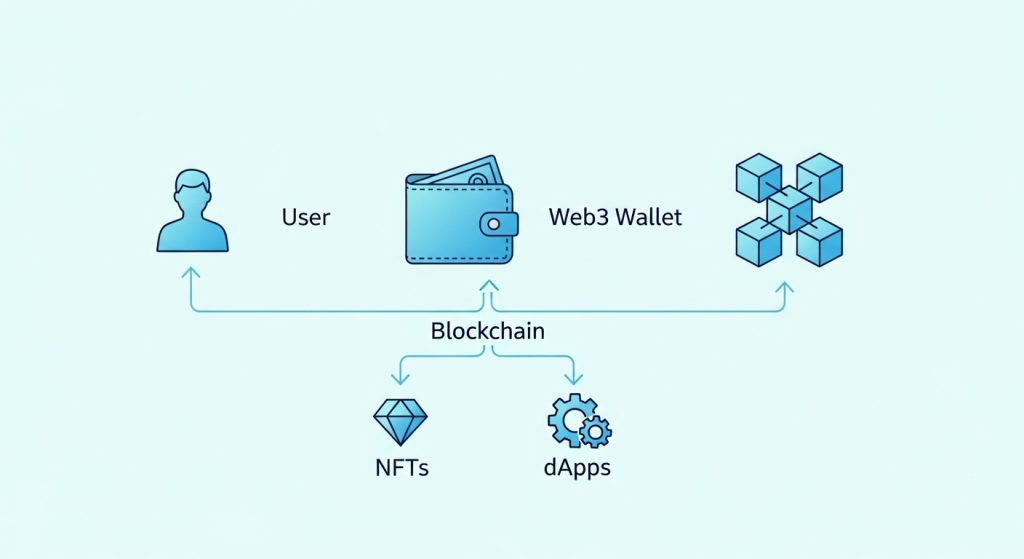
A wallet is more than just a place to hold your cryptocurrency.
Its main job is to let you store, send, and receive various digital assets, like Ethereum, NFTs, and tokens. But that’s only part of the story.
Most Web3 Wallets Provide:
You’ll find that most web3 wallets provide:
- Secure storage for digital currencies without tying assets to your real identity
- Direct access to DeFi tools and investment options like lending or swapping tokens
- Support for NFTs and token-based membership or ownership
- Sign-in features for dApps so you can engage with blockchain platforms easily
How Web3 Wallets Differ from Web2 Wallets
Traditional apps like PayPal or Venmo, sometimes called “Web2” wallets, work by holding your money and relying on banks or payment processors.
They keep your assets within their own systems, and control can be revoked if there’s a dispute or service outage.
Here are the key differences:
Here are the key differences between Web3 and Web2:
| Feature | Web2 Wallet | Web3 Wallet |
|---|---|---|
| Control | Centralized (company) | Decentralized (user) |
| Identity | Linked to personal info | Pseudonymous or anonymous |
| Asset Types | Fiat currency, cards | Cryptocurrencies, NFTs, tokens |
| Interoperability | Limited, closed network | Open, connects with any dApp |
| Recovery Options | Password reset, support | Seed phrase only (user’s job) |
Popular Use Cases for Web3 Wallets
Why are people adopting web3 wallets in the first place?
For freelancers, small businesses, or digital nomads, these tools mean more flexible and borderless payments.
If you work with clients abroad or get paid in crypto, a web3 wallet is a powerful companion.
Why Control Matters
In web3, control equals freedom, but also responsibility.
Since there’s no customer support to recover lost keys, you have to keep backup copies of your seed phrase in a safe place.
When you understand what is web3 wallet is, you’re recognizing it’s both your bank and your vault.
How Does a Web3 Wallet Work?
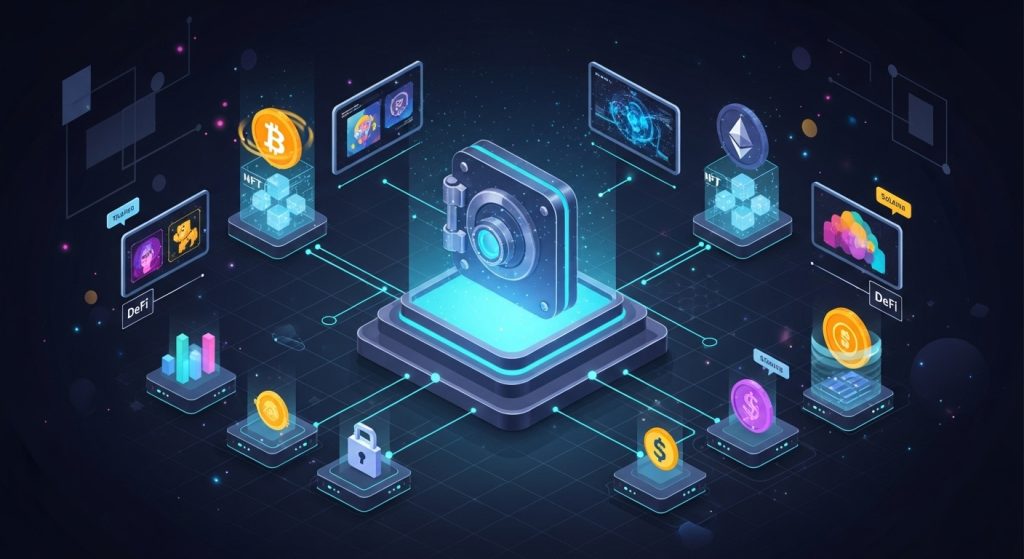
If you’ve learned the basics of what is web3 wallet is, understanding how it works is your next step.
These wallets handle more than just coins; they power your access to digital assets, decentralized apps, and blockchain identity, all with a focus on user control.
The Role of Private Keys and Public Addresses
A web3 wallet uses key pairs to keep your assets safe and accessible.
When you create a wallet, you get a public address (like an account number) and a private key (your “password” to the funds).
The public address is safe to share, but the private key stays secret.
How Transactions Work
When you send crypto or tokens, your wallet signs the transaction using your private key (without ever revealing the key itself).
This signature proves you own the funds, and the network updates the blockchain ledger.
Connecting to dApps
Web3 wallets act as your “passport” to decentralized apps (dApps).
When you connect to a dApp, it usually asks you to sign a message (proving ownership) rather than hand over any keys or data.
This handshake keeps your identity private and your funds secure.
Security and Self-Custody
Unlike bank apps or centralized crypto platforms, web3 wallets never touch your funds. They just help you manage your keys and talk to blockchains. This self-custody approach puts everything in your hands.
Multi-Network Convenience
Modern web3 wallets often support several blockchains, letting you store Ethereum, Solana, Polygon, and more in the same place.
Switching between networks usually takes just a tap or click.
This makes them flexible for freelancers, business owners, and crypto enthusiasts who deal with multiple currencies and projects.
Key Features and Types of Web3 Wallets
Understanding the key features and types of web3 wallets is essential for anyone eager to take full control of their digital assets.
Whether you’re a freelancer, business owner, or casual crypto user, the kind of wallet you choose will affect everything from security to daily usability.
Let’s break down the main categories and compare some of the most popular options available.
Non-Custodial vs. Custodial Web3 Wallets
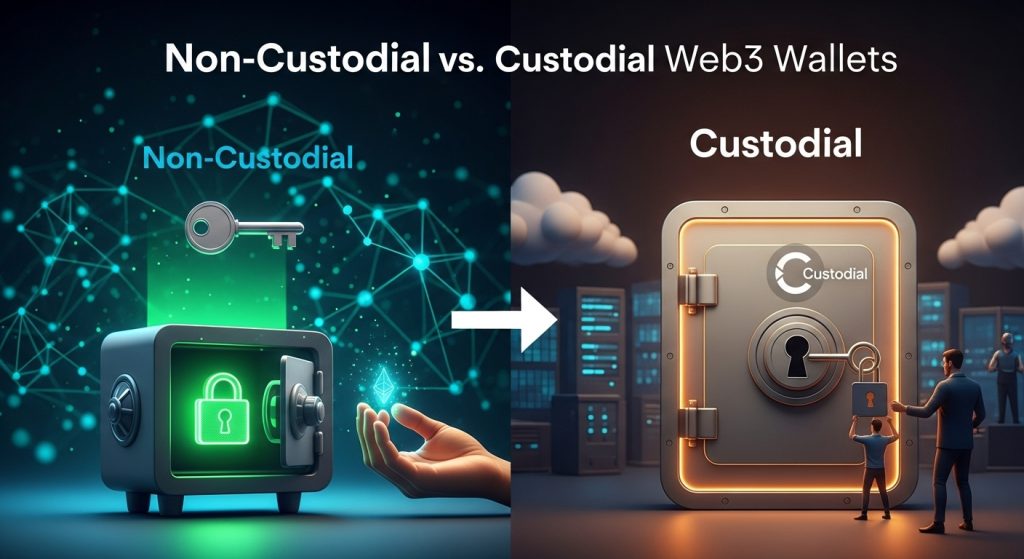
When choosing a wallet, your first big decision is between non-custodial and custodial options.
Each has strengths and trade-offs, depending on how much control you want and how much responsibility you’re willing to take.
Benefits and Use Cases of Web3 Wallets
Wallets aren’t just for crypto traders.
They’re reshaping how people manage money, digital identity, and online interaction.
These wallets open the door to a future where you control your assets, tap into global marketplaces, and interact with new types of online services without middlemen.
Major Benefits of Web3 Wallets
Web3 wallets stand out because they give users power and flexibility, especially compared to traditional finance tools.
Everyday Use Cases for Web3 Wallets
The true value of a web3 wallet appears when you see how people use them in real life. Here are some of the top use cases:
- Freelancer Payments: Receive payments from clients around the world instantly. No bank delays or currency conversions, just fast, borderless transactions.
- Digital Nomad Spending: Manage crypto, stablecoins, and even local currencies while traveling. Pay for accommodation, subscriptions, or services wherever you go.
- NFT Collecting and Trading: Buy, store, or sell digital art and collectibles directly from your wallet. Some wallets let you interact with multiple marketplaces without needing separate accounts.
How Businesses Benefit from Web3 Wallets
Wallets aren’t just personal tools. Small businesses and startups are realizing big gains, too.
- Accept Crypto Payments: Open new revenue streams and reach customers globally, with fewer restrictions from banks or payment processors.
- Automated Transactions: Use smart contracts to automate payroll, supply chain payments, or royalty sharing. This saves both time and money.
- Customer Rewards: Launch NFT-based loyalty programs or offer token rewards straight to a customer’s wallet for faster engagement.
Web3 Wallet Security Best Practices
Once you know what a wallet is and how it works, the next step is protecting your funds and data.
Web3 wallets put you in full control, but with that power comes real responsibility.
Just as you wouldn’t hand out your ATM PIN, your crypto keys need careful handling.
Protecting Your Private Keys and Seed Phrase
Your private key and seed phrase are the heart and soul of your wallet’s security. Losing them is like dropping the only key to your safe.
Using Strong and Unique Passwords
Many wallets let you add a password for extra protection before you can spend or manage your funds.
Here’s how to approach this layer securely:
- Use unique passwords for your wallet apps, not shared with emails or other sign-ins.
- Combine uppercase, lowercase, numbers, and symbols to make guessing or brute-force attacks much harder.
- Consider password managers to generate and safely store long, random passwords.
Avoiding Phishing and Social Engineering
Phishing scams try to trick you into sharing private details.
Fake websites or messages can look almost identical to real wallet services.
Managing Device and Software Security
The device you use for your wallet is just as important as the wallet itself.
Reviewing Permissions and Dapp Access
Web3 wallets let you connect to hundreds of decentralized apps, but not every app deserves access to your money.
- Review and revoke unnecessary dApp permissions in your wallet settings to reduce risk.
- Be cautious with new or unknown dApps; do a quick search to make sure they’re trusted before connecting your wallet.
- Disconnect wallets from dApps when not in use to limit potential attack windows.
Practice Self-Custody Caution
While web3 wallets put you in charge, they also remove the recovery safety net you get with banks or most traditional apps.
- Backup your seed phrase as soon as you create the wallet; don’t put it off.
- Never enter your seed phrase into a website or app, unless you’re recovering an official wallet and know for certain it’s the correct page.
Web3 Wallets and the Future of Decentralized Finance
Web3 wallets are changing how we use and interact with money online.
These tools do more than hold digital coins.
They’re gateways to new financial systems, direct transactions, and more freedom over your own assets.
How Web3 Wallets Shape DeFi Access
Decentralized finance, or DeFi, lets anyone use financial services like lending, borrowing, swapping tokens, or earning interest, all without a bank account.
Web3 wallets play a crucial role here by acting as your direct link to these open platforms.
The Rise of Non-Custodial Control
One major reason web3 wallets are leading the future of finance is control.
Non-custodial wallets mean only you control the private keys; nobody else can move your funds or freeze your account.
Inclusion, Speed, and Lower Costs
Traditional financial apps often block users by location, identity, or minimum balance.
Web3 wallets break down these walls.
Web3 Wallets as Identity and Access Tools
A web3 wallet is more than a vault. It’s also your identity card for the next generation of digital platforms.
You can sign into dApps, vote in decentralized autonomous organizations (DAOs), or access exclusive offers, all with your wallet.
The Future: More Than Just Crypto
Web3 wallets aren’t limited to Ethereum or Bitcoin.
As new blockchains and tokens pop up, these wallets adapt, letting you use multiple chains from the same interface.
NFTs, stablecoins, tokenized stocks, and even real-world assets are all being managed from your digital wallet.
Conclusion
Web3 wallets are changing how people manage money, secure assets, and do business online.
These wallets put you in control, making payments, savings, and digital identity safer and more accessible compared to old-school banking apps.
The power to send and receive value globally, store crypto, and interact with decentralized services starts with understanding what is web3 wallet is and using it wisely.
Their flexibility and independence set the standard for future payment solutions, giving freelancers, small business owners, and digital nomads more freedom in their financial lives.