
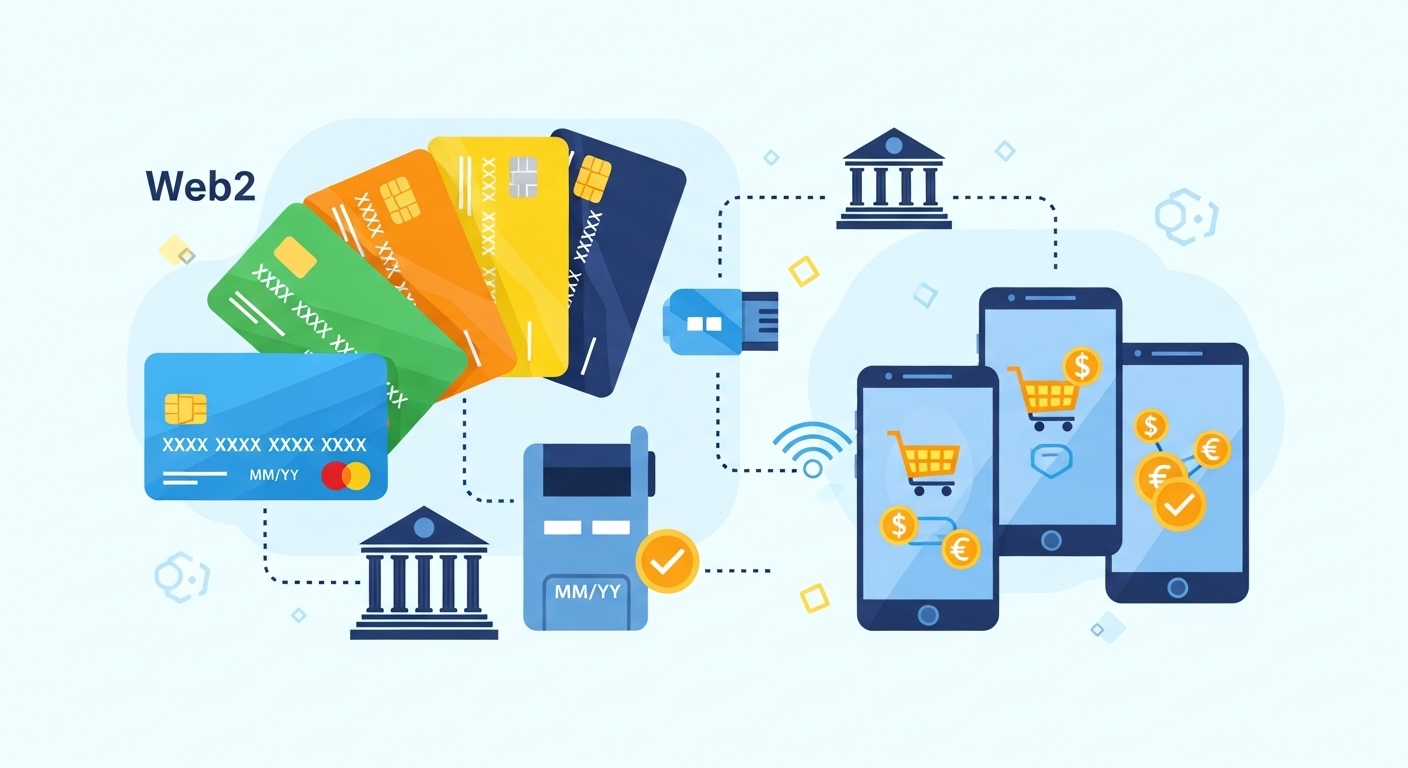
Web2 payments are the backbone of today’s online financial activity.
These are the payment systems people use daily, from sending money to friends through apps to paying freelancers and moving funds between bank accounts.
What Are Web2 Payments?
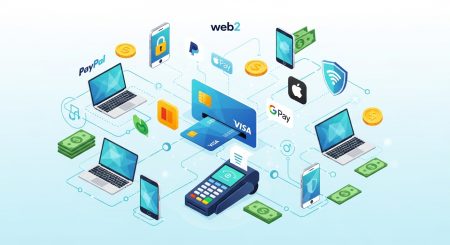
Web2 payments represent a major shift in how money moves in the digital era.
Unlike the days of mailing checks or lining up at the bank, people today expect quick, safe, and smooth payments for everything from online shopping to splitting bills with friends. .
The Evolution from Traditional to Web2 Payments
Money movement used to mean counting cash or waiting days for a bank transfer to clear.
Early online banking offered only basic features, often with high fees and clunky interfaces.
As the internet grew, the need for more practical and reliable online payment options became clear.
Key Characteristics of Web2 Payment Systems
Web2 payments stand out for making money movement:
- More secure: Advanced encryption, multi-factor authentication, fraud detection, and dispute resolution give peace of mind.
- Faster: Real-time transfers, instant notifications, and same-day withdrawals skip the slow pace of paper checks and old bank schedules.
- Convenient: Pay anyone, anywhere, any time, often from a single app on your phone or computer.
Popular Web2 Peer-to-Peer Payment Apps
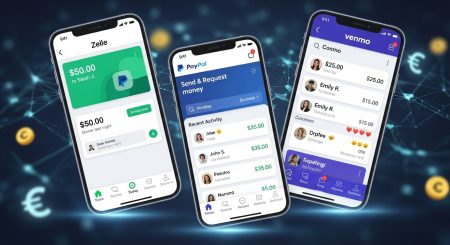
Peer-to-peer payment apps have reshaped how we send, receive, and manage money.
From paying a friend for lunch to getting paid for a freelance gig, these tools make financial transfers simple and nearly instant.
Web2 payments apps are a lifeline for gig workers, small business owners, digital nomads, and anyone who wants to move money quickly without the old hassles of cash or checks.
Comparing Payment App Features and Fees
Today’s major web2 payment apps each have their unique strengths.
The most popular names are Venmo, PayPal, Zelle, Cash App, and Revolut.
Understanding their features and fees helps users pick the best app for their needs.
Venmo
- Social feed for payments, perfect for splitting bills with friends.
- Connects to major banks and cards in the US.
- Standard transfers are free; instant transfers incur a small fee.
- Appeals to younger users and those who value simplicity and ease.
PayPal
- Robust platform supporting both personal and business use.
- Handles international payments across many countries.
- Fees apply for cross-border transactions and currency conversion.
- Strong buyer and seller protections, suitable for freelancers and e-commerce.
Zelle
- Direct link to major US banks for real-time bank-to-bank transfers.
- No extra fees for using the service.
- Accessible through most online banking apps.
- Best for people who want quick, fee-free transfers between bank accounts
Cash App
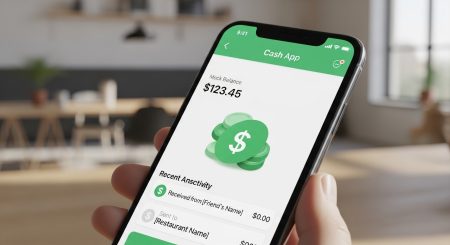
- Offers both personal and business accounts.
- Instant deposits for a small fee.
- Built-in support for Bitcoin and investing.
- Popular with gig workers and freelancers for easy payments.
Revolut
- Focus on cross-border functionality and currency exchange.
- Low fee structure compared to traditional banks.
- Management tools for budgeting and analytics.
- A favorite among digital nomads and people who travel frequently.
Here’s a quick snapshot for easy comparison:
| App | Best For | Main Fees | Notable Features |
|---|---|---|---|
| Venmo | Social payments, US users | Instant transfer fees | Social feed, bill splitting |
| PayPal | Freelancers, int’l users | International currency fees | Global reach, buyer/seller protection |
| Zelle | US bank users | None | Built into bank apps, speed |
| Cash App | Gig workers, investors | Instant deposit fees | Bitcoin, business accounts |
| Revolut | Travelers, global users | FX and withdrawal fees | Multi-currency, analytics |
How Web2 Payments Enable Flexible Work and Digital Nomadism
Fast web2 payments have given rise to more flexible work.
Whether you’re freelancing from a coffee shop in Lisbon or hiring a contractor across the country, instant digital transfers make it possible.
Security and Compliance in Web2 Payment Platforms
Security and compliance are at the heart of every reliable web2 payments platform.
Users trust these services with sensitive financial information, so strong privacy practices, fraud controls, and adherence to industry rules are expected.
User Privacy and Data Protection Concerns
Today’s web2 payment platforms process millions of personal details and payment records.
Protecting this data is not just good practice, it’s required by laws and consumer expectations.
Minimizing Fraud and Resolving Disputes
Fraud can shake trust in any payment system, and web2 platforms put up many barriers to stay ahead of scammers.
Here’s how most trusted services protect users and handle issues:
Common fraud prevention features you’ll find:
- Transaction alerts: Real-time push notifications or emails tell you the moment money moves, helping spot unauthorized activity fast.
- Fraud detection algorithms: Machine learning analyzes each transaction for red flags. Like sudden large transfers or unfamiliar devices, flag those for review.
- User authentication: Login checks, 2FA, and device verification reduce account takeovers.
- Limits on transfers: Some apps set daily or weekly maximums to stop big, unfamiliar payments from going through without added user checks.
To reduce risk, users should:
- Always turn on all available security features.
- Review account activity often.
- Use strong, unique passwords for every payment app.
The Future of Web2 Payments: Trends and Challenges
Web2 payments have driven an era of fast online money movement, but change is coming fast.
New technologies are shaking up what users expect from sending, receiving, and managing funds.
With more people turning to instant transfers, open banking APIs, and even web3 tools, both opportunities and hurdles appear on the horizon.
Bridging Web2 and Web3: The Road Ahead
The boundary between Web2 and Web3 payments grows thinner every year.
Crypto is no longer just an experiment; it’s finding a role alongside card transactions, wires, and mobile transfers.
Many payment apps now talk up “hybrid” options and integrations that let users connect a decentralized wallet right inside an existing app.
Key developments in bridging web2 and web3 payments include:
- Integrated wallets: More platforms are adding support for crypto wallets and stablecoins. This lets users hold digital assets next to traditional ones, making switching between them simple.
- Open banking APIs: Open banking is spurring interoperability, letting payment apps connect directly to bank accounts and blockchain wallets alike.
- Instant conversions: Services are rolling out real-time crypto-to-fiat conversion, boosting flexibility without slowing transactions.
Conclusion
Web2 payments remain a solid choice for freelancers, small businesses, and anyone who values simplicity with speed.
Even as next-generation solutions get more attention, these platforms deliver reliable transfers and trusted security.
With new features rolling out and digital payments growing worldwide, tech-savvy users can find plenty of ways to keep their money moving safely.
Learning the ins and outs of web2 payments makes it easier to spot the right app and avoid extra fees.
For more insight on how peer-to-peer platforms put control and flexibility in your hands, explore About PayApeer.