

Payments with crypto are changing cross-border payments with crypto by offering faster transfers, lower fees, and borderless access for freelancers and businesses.
As adoption rises, payments with crypto give users more control and flexibility compared to traditional international banking.
Traditional Cross-Border Payments: Challenges and Limitations
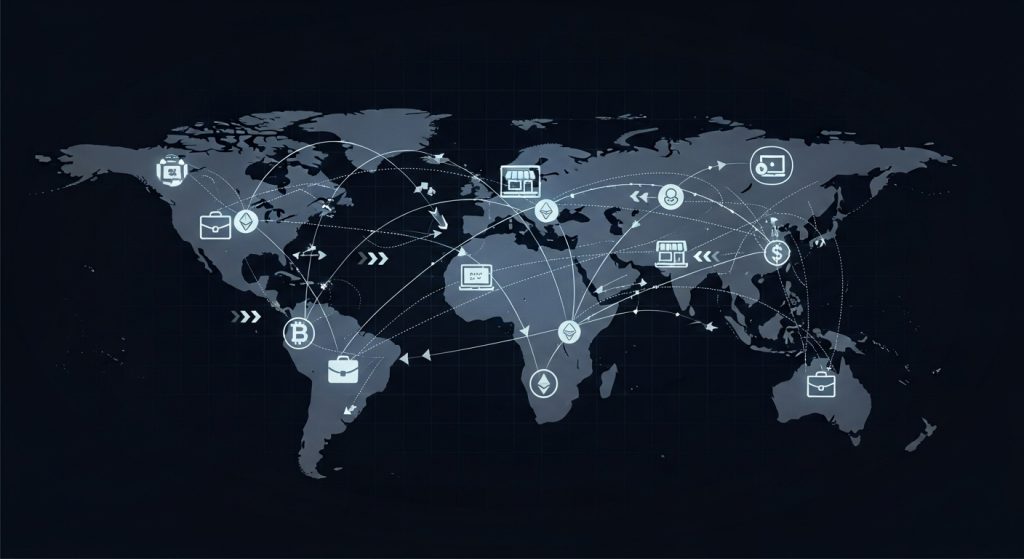
Traditional cross-border payments with Crypto have long been the backbone for global business, remittances, and freelance work.
But for many users, especially freelancers, small businesses, and digital nomads, these systems often feel outdated and unnecessarily complicated.
Slow Settlement Times
Wired payments between countries can leave you waiting for days.
Banks use a web of correspondent institutions, each adding their own checks and approval steps.
High Transaction Fees
Moving money across borders almost always comes with fees. Banks and payment services charge both upfront and hidden costs, which often include:
- Outgoing wire fees
- Intermediary (correspondent) bank fees
- Foreign exchange margins
Unpredictable Exchange Rates
Traditional services rarely use the real mid-market currency rates you see on Google.
Instead, they offer less favorable rates and snag extra profit on currency conversion.
Limited Access and Financial Inclusion
Banks in many countries still require strict documentation, a permanent address, and often local residency.
For digital nomads, remote teams, and people in underbanked regions, these barriers can shut them out of global opportunities.
Compliance and Bureaucracy
Anti-money laundering (AML) rules and regulations are important, but they also add heavy paperwork to every new cross-border client or transaction.
Lengthy compliance checks can stall payments, putting pressure on businesses or workers who bill by the project or hour.
Limited Transparency and Tracking
Once you send a traditional cross-border payment with crypto, you might lose sight of it until it finally clears.
Tracking is often poor, with little visibility into where the payment is held up or when it’ll land.
This “black hole” effect causes stress and complicates planning future spending.
Pain Points Using Traditional Cross-Border Payments
| Challenge | Impact |
|---|---|
| Slow settlement | Causes cash flow issues, payment delays |
| High fees | Eats into profits and paychecks |
| Poor exchange rates | Reduces value of received funds |
| Limited access | Excludes many users from the global economy |
| Heavy compliance | Adds paperwork, slows down payments |
| Poor transparency | Leaves users guessing about payment status |
How Crypto is Transforming Cross-Border Payments
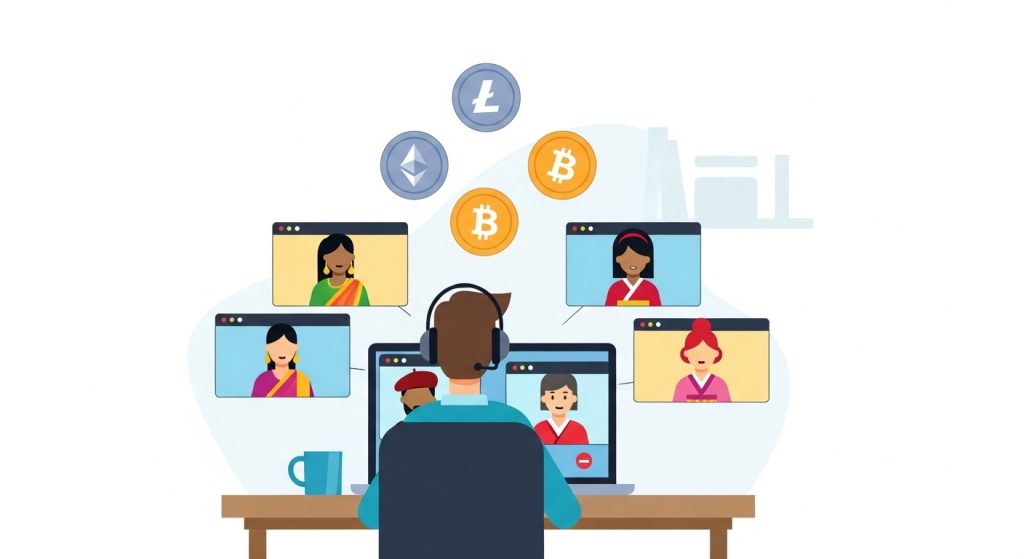
Cross-border payments with crypto solutions are changing the way money flows across borders.
Using blockchain technology and digital currencies, people can move funds faster, with lower fees and improved transparency.
This system offers a real alternative to old-school banks, giving users more control over how and when they send money.
Role of Stablecoins in International Transactions
Stablecoins such as USDC and USDT have solved a major problem with regular cryptocurrencies: price swings.
They keep their value linked to a steady asset, such as the US dollar, so users can feel confident that the amount sent matches the amount received, minus small network fees.
Here are a few standout benefits:
- Lower fees than traditional remittance providers
- Near-instant transfers that skip banking delays
- Protection from wild inflation in local currencies
Blockchain’s Impact on Settlement and Transparency
Blockchain technology makes payments with Crypto simple, fast, and nearly impossible to tamper with.
Each transaction is recorded as a permanent, public entry.
Integration with Traditional Banking Systems
Cross-border payments with crypto are no longer separate from banks.
Today, open banking models and smart APIs let digital wallets connect to legacy systems, making transfers smoother for everyone involved.
Key Benefits for Freelancers, Small Businesses, and Digital Nomads
Moving money globally used to be an uphill battle for independent workers, business owners, and remote professionals.
Now, with cross-border payments with crypto, you can skip extra fees, delays, and endless paperwork.
Let’s examine how this innovative payment technology is directly helping freelancers, small businesses, and digital nomads work smarter and get paid faster.
Benefits for Freelancers
Freelancers often juggle clients across time zones, each with their own local banking quirks.
With crypto, getting paid is easier and fairer.
No more losing a chunk of your income to hidden conversion fees or waiting days for funds to clear.
Some top perks freelancers are enjoying include:
- Instant payments, even on weekends or holidays.
- Lower transaction costs, so you keep more of what you earn.
- Stablecoins that help avoid the usual ups and downs of crypto pricing.
Benefits for Small Businesses
Cross-border payments with crypto aren’t just a novelty; they can help level the playing field for small business owners.
Traditional banking often puts up barriers for global suppliers, online sellers, and those who need to work beyond borders.
Key benefits that matter for small businesses:
- Faster settlements shorten the wait to access working capital.
- Reduced fees compared to classic international wire transfers.
- Seamless vendor payments and easy payroll for overseas teams.
- Automated record keeping with blockchain tracking.
Benefits for Digital Nomads
Life on the move brings freedom but also financial headaches.
Setting up local bank accounts or dealing with fluctuating currencies can zap your productivity.
Why digital nomads are choosing crypto payments
- No need for a permanent address or local residency.
- Borderless access to earnings and spending power.
- Lightweight, mobile-first solutions control your funds with an app or wallet.
- Protection from negative exchange rates and bank restrictions.
Regulatory, Security, and Adoption Challenges
While cross-border payments with crypto have changed the way people send money around the globe, barriers still get in the way of everyday use, especially for freelancers, digital nomads, and small business owners.
To better understand the risks and roadblocks, it helps to break the challenges into three core categories: regulatory hurdles, security concerns, and slow adoption by the mainstream.
Regulatory Challenges
Countries treat crypto payments differently.
Some support innovation, while others restrict or even ban digital currencies.
Security Challenges
Trust and safety are always top of mind when moving money.
Crypto offers strong security on the blockchain, but plenty of threats exist outside the technology itself.
Adoption Challenges
Crypto has yet to hit the mainstream for everyday payments.
Many clients, contractors, and vendors still haven’t tried crypto or simply don’t trust it yet.
Obstacles that slow adoption include:
- Complicated onboarding for less tech-savvy users.
- Limited options to “cash out” to local currency in some regions.
- Unfamiliar user interfaces on wallets and exchanges.
- Persistent myths about crypto being unstable or risky.
The Future of Cross-Border Payments with Crypto

Cross-border payments with crypto are experiencing a big shift as crypto technology continues to mature and inspire new possibilities.
While the basics are already impressive, fast settlements, low fees, and global reach, the next wave will be about even more convenience, safety, and flexibility.
Ongoing Payments Modernization
Banks and payment providers are updating their systems to keep up with digital currencies.
Traditional processes involve a chain of intermediaries, which slows things down.
New technology allows payments to move almost instantly, even across different countries.
Blockchain and Decentralized Protocols
Blockchain creates a permanent, auditable record for each transaction.
This unlocks powerful new features, not just for payments, but also for compliance and business automation.
Tokenization and Next-Generation Finance
Tokenization is taking the financial system beyond what’s possible with today’s infrastructure.
Instead of passing money through a maze of banks and intermediaries, tokenized assets can move instantly across borders, tracked automatically, and governed by code.
What This Means for Users
The future will bring more choices, better user experiences, and stronger access for people everywhere.
Expect digital wallets and cross-border payments with crypto apps to offer support for both national currencies and crypto, making cross-border payments feel as quick and simple as sending a text.
Conclusion
Understanding how crypto is shaking up cross-border payments puts you ahead of the curve, especially if you depend on fast, low-cost P2P transactions for your work or business.
Staying informed about new tools and trends helps you grab more control and flexibility, two things every freelancer, small business owner, or digital nomad needs.
Don’t stop here. New peer-to-peer solutions are launching all the time, and fresh ideas can shape the way you manage money day to day.
Explore the Best P2P Payment Apps or catch up on insights at the PayApeer Official Blog for deeper guides and news.